Equity is a 100% employee-owned firm headquartered in Shaker Heights, Ohio, specializing in the evaluation, design, and lifecycle management of new and aging infrastructure across the refining, petrochemical, chemical, pharmaceutical, and other process-intensive industries across the continental United States.
North America’s Industrial Asset Integrity Partner
Headquarters: Shaker Heights, OH | Regional Offices: Katy, TX and Webster, TX
Equity operates from its corporate headquarters in Shaker Heights, Ohio, with regional offices in Katy and Webster, Texas. Our team is centrally positioned in North America's refining and petrochemical corridor to deliver specialized consulting services, asset and inspection management, software, corporate standards, and training that improve safety, manage risk, and control costs.
As an employee-owned company, Equity is filled with engineers with direct refinery and plant experience, industry professionals, and software developers who provide practical solutions across the full asset lifecycle. Our engineering consulting team has P.E. licenses across every State where stamped engineering work is performed. Facilities from the Gulf Coast to the Pacific Northwest can receive P.E.-stamped deliverables without delay or qualification gaps.

Expert technical support and consulting services for asset integrity management, turnaround planning, and failure analysis.
Engineering Consulting Services

CorrSolutions provides turnkey solutions that optimize asset inspection and maintenance programs.
Inspection & Asset Management Services

Access cloud-native software tools for FFS analysis, RBI management, piping stress analysis, and asset integrity management.
Engineering Software

Preserve institutional knowledge and standardize engineering practices with the comprehensive and searchable Equity Engineering Practices®.
Corporate Standards

Build your team's technical capabilities through API-U approved courses, specialized ETI training, and customized onsite training programs delivered by industry experts.
Training
Case Studies
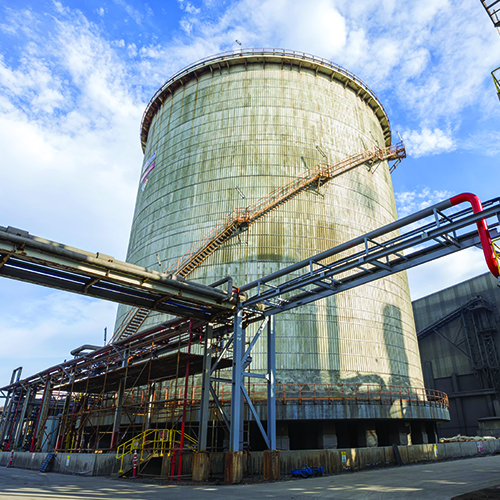
Fitness-for-Service (FFS) Optimizes Remaining Life of Aboveground Storage Tank Shells
Industry: Refining
Type of Asset: Aboveground Storage Tank (AST)
Region: USA
Issue: After a routine inspection of a 245’ (74.6m) diameter carbon-steel internal floating roof AST, a North American-based refinery identified a region of local metal loss on the tank bottom and shell near the corner joint.
Solution: Given the location of the damage, Equity Engineering conducted a Level 3 assessment in accordance with API 579 to evaluate the FFS of the localized thinning on the AST. Currently, API 653 Tank Inspection, Repair, Alteration, and Reconstruction does not offer rules for localized thinning across this junction. Even if the local thinning was identified exclusively on the shell near the top of the first course, an API 579 Level 3 assessment would still have been required due to the large tank diameter.
Result: The evaluation indicated two options to extend the remaining life of the tank:
- Option 1: reduce the fill height to about 75% to satisfy the required load cases using a future corrosion allowance (FCA) and extend the remaining life by 10 years
- Option 2: adjust the fill height to 85%, which will extend the remaining life by 1-2 years
Using the information Equity Engineering provided, the refinery made an informed decision while also meeting operational requirements.
Large-Scale Brittle Fracture Project
Industry: Midstream
Type of Asset: Pipeline Storage Facility
Region: USA
Issue: Due to low operating temperatures, a pipeline storage facility had identified several pressure vessels with a potential risk for brittle fracture.
Solution: Equity Engineering completed several Level 3 FFS assessments to determine the permissible safe operating limits for all equipment items. When necessary, a finite element analysis (FEA) was performed to quantify through-wall stress distributions at critical locations. In addition, fracture mechanics calculations were performed on the equipment to determine the minimum allowable temperature (MAT) limits, as a function of pressure, for each critical location.
Result: All equipment was qualified for continued operation at the current target operating and upset conditions. Our team provided guidance to assist the owner-operator in establishing an appropriate inspection plan for each pressure vessel.
Determine the Path Forward for Tube Rupture Mitigation
Industry: Refining
Type of Asset: Heat Exchanger
Region: USA
Issue: The client identified a need to redesign the existing pressure relief system for a heat exchanger so it could adequately handle the full-bore tube rupture scenario.
Solution: We performed a rigorous analysis of the heat exchanger design and process conditions to determine whether the exchanger was susceptible to a full-bore tube rupture via tube vibration, erosion, applicable damage mechanisms, fatigue, tube pullout, or tube buckling.
Result: The full-bore tube rupture scenario was determined to be non-credible for the exchanger, thereby eliminating the need to redesign the existing pressure relief system. We recommended incorporating a leak detection system and regular tube inspection to mitigate the client’s concern of any long-term damage that could lead to a full-bore tube rupture.