Strategic design optimization and fabrication reviews enhance equipment reliability while mitigating long-term maintenance costs. Equity Engineering provides authoritative ASME Section VIII rerate certifications, User Design Specifications (UDSs), and R-Stamp documentation. Our experts leverage advanced FEA and pipe stress analysis to support capital projects and extend asset lifecycles.
Download the Mechanical & Structural Engineering Overview here.
Achieve Safer Plants with Optimized Design
Are you building a new plant, installing new equipment, or conducting repairs to meet new code requirements?
Equity will help you through the design, specification, and optimization of industrial processing facilities, including pressure vessels, piping, heat exchangers, furnaces, and storage tanks. Our multi-disciplinary engineering team provides practical recommendations to help you improve operational reliability, control maintenance costs, and extend an asset’s lifecycle.
New Equipment: Design & Optimization
Receiving guidance on material selection, equipment design, and fabrication reviews will increase reliability, reduce maintenance costs, and improve personnel and facility safety. Equity offers several services from new equipment design to full capital project support, including:
- Asset & Mechanical Integrity (MI) – Align the process safety management (PSM) conditions with an evergreen MI program to comply with all jurisdictional requirements.
- Equity Engineering Practices® (EEPs) – Proactively improve safety and compliance by combining equipment design and process optimization services with standardized corporate Best Practices.
- Fitness-for-Service (FFS) & Suitability-for-Service (SFS) – Repurposing evaluations share many of the same multi-disciplinary features as a large FFS or SFS project. We understand the collaboration required for a successful re-use evaluation.
- Pressure Relieving System Audits – Review design basis documents and calculation techniques to meet industry standards and RAGAGEP to audit calculations for accuracy, consistency, and verification of documentation.
- Risk-Based Inspection (RBI) Implementation – Perform quality assurance checks throughout an RBI implementation process to identify issues that require further investigation and develop an evergreen RBI program.
Post-Construction: Equipment Repair & Alteration
Our multi-disciplinary engineering team provides repair scoping, design, and optimization for temporary and permanent repairs of pressurized fixed equipment. Our team provides solutions that maximize the effectiveness of a repair while considering all aspects of the equipment lifecycle.
- Temporary & Permanent Repairs – Perform detailed repair scopes for pressurized equipment that leverage state-of-the-art technology and supplement the guidance in the applicable codes and standards (API 579, NBIC, API 510, API 570, API 653, and ASME PCC-2).
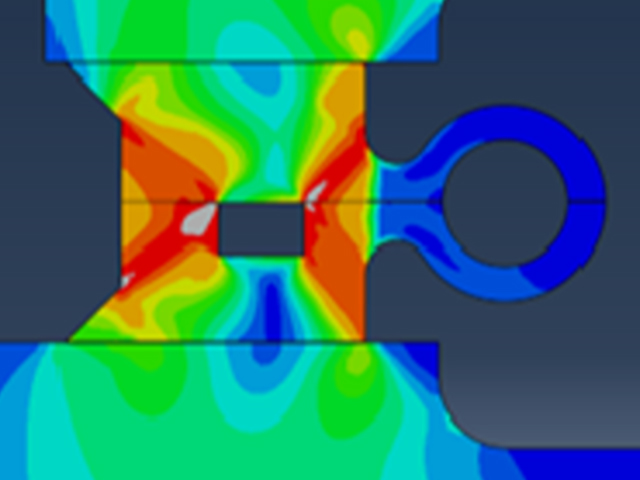
- Post-Weld Heat Treatment (PWHT) – Conduct detailed engineering assessments, including advanced FEA, to optimize PWHT arrangements and thermal gradients to prevent detrimental distortion, cracking, or excessive residual stress. We also perform structural stability evaluations to determine if supplemental support is necessary.
- Rerates & Certification – Perform fixed equipment rerates in accordance with API 510 and provide certifying engineer services for ASME Section VIII, Division 2 User Design Specifications (UDSs) and Manufacturer’s Design Reports (MDRs). If physical modifications and a new R-Stamp nameplate are necessary, we will provide design calculations and documentation to the vendor.
- Tank Hydrotest Exemptions – Perform a hydrotest exemption evaluation on an aboveground storage tank to determine the critical flaw size(s) at repair locations.
- Hot Tap Evaluation – Review current welding procedures and provide practical repair guidance for any type of damage mechanism to ensure new construction or planned maintenance is compliant with the latest industry standards.
SIMFLEX-IV
SIMFLEX-IV, a cloud-based pipe stress analysis software, helps you proactively evaluate dynamic and static piping stresses to maintain integrity and code compliance across your entire piping system. Use the once-through workflow to create piping stress models, visualize geometry and support locations, analyze the effects of both dynamic and static stresses, and compare results to ASME piping code requirements.