Increase Safety & Reliability of Aging Infrastructure
By 2027, the global pipeline length is expected to be more than 1.49 million miles (2.4 million km) long! In North America, the largest midstream market, much of the infrastructure was constructed more than 50 years ago. It is important to increase the safety and reliability of this aging infrastructure to meet the growing demand for petroleum and natural gas.
At Equity Engineering, we leverage technology and industry experience to extend the safe operating life of new and aging equipment, including pipelines, pressure vessels, and other components. Our multi-disciplinary team provides consulting services, software, and training to help you prevent future failures, manage risk, and control inspection costs throughout a facility’s lifecycle.
Midstream & Pipeline Consulting Service Areas
Extend an asset integrity management program to pipelines and facilities to ensure safe, efficient, and reliable operations.
Access engineering practices specifically for pipeline and other midstream facilities.
Increase operational reliability and extend equipment life by making informed run, repair, or replace decisions on in-service equipment.
Instrumentation & Control Systems
Improve the safety and reliability of instrumentation and control systems.
Identify damage mechanisms to assist in designing pipeline corrosion mitigation systems and inspection programs.
Mechanical & Structural Engineering
Conduct suitability-for-service assessments on pipeline facility equipment that lacks adequate documentation.
Pressure Relief & Process Technology
Verify safety critical pressure relieving systems, provide adequate protection, and meet the latest jurisdictional and RAGAGEP requirements.
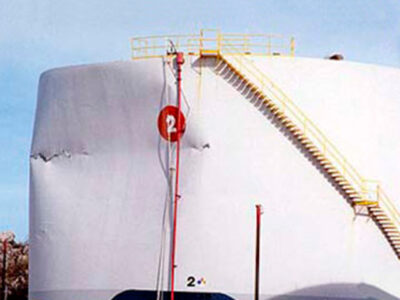
Implement tank RBI as part of your facility’s overall tank integrity management program to reduce the risk of loss of containment.
Rotating Equipment, Vibration, & Dynamics
Conduct onsite piping and structural vibration surveys to evaluate equipment, assess the risk of vibration, and mitigate vibration fatigue failures.
Logistics Engineering Practices (LEPs)
The new Logistics Engineering Practices (LEPs) are the industry’s first commercially available standards focused on midstream facilities. The LEPs seamlessly integrate legacy documents and subject matter expert (SME)-maintained knowledge, providing a comprehensive framework that will enhance your mechanical integrity programs, improve equipment reliability, and reduce inspection and maintenance costs. The LEPs align with ASME B31.3, B31.4, and B31.8 and other industry standards to deliver a tailored solution that maximizes efficiency while meeting regulatory requirements. Integrate the LEPs and start sharing knowledge, satisfying process safety management requirements, and optimizing performance across your facility.
Equity Engineering’s Industry-Leading Software
Equity Engineering’s state-of-the-art cloud-based software tools help you make informed decisions to keep oil and gas facilities safe and operating at optimal production levels. Our fully integrated software supports all aspects of equipment lifecycle management by integrating the latest API/ASME codes and standards with the depth of Equity Engineering’s engineering experience.
Industry-Relevant Training
Equity Technical Institute offers virtual and in-person training courses to support your professional growth, wherever you are in your career — new hire, mid-career, or expert. You will learn from a team of highly skilled and knowledgeable engineers who have 20+ years of oil and gas industry experience. All Equity Engineering training courses qualify as activities for API’s new CPD hours and align with the latest API and ASME codes and standards.
Equity Engineering’s Role in Advancing Oil & Gas Methodologies
Our engineers pioneered the advancement of RBI and FFS technologies and were the lead investigators of the international standards API 579-1/ASME FFS-1 Fitness-for-Service, API 571 Damage Mechanisms Affecting Equipment, and API 581, Risk-Based Inspection Technology. Today, these documents are the standards of choice for other industries such as petrochemical, pulp & paper, biofuels, food processing, and non-commercial nuclear.
Our experts:
- Are the primary authors on WRC 528 and WRC 562
- Serve as lead investigators on API 579, API 571, and API 581
- Have been the API 520 task force chairperson for more than 25 years
- Are Members of the API Sub-Committee of Mechanical Equipment (SOME)
- Are certified ISO VCAT-IV vibration analysts