Identifying and Understanding the Risk of Acoustic-Induced Vibration Failures

  • Home
  • Identifying and Understanding the Risk of Acoustic-Induced Vibration Failures

Identifying and Understanding the Risk of Acoustic-Induced Vibration Failures

Nathan D. Libertowski, Engineer II; Michael F.P. Bifano, Ph.D., P.E., Consulting Engineer I

Note: The following article was published in the March/April 2021 issue of the Inspectioneering Journal. Please submit the form below to access the full article. 

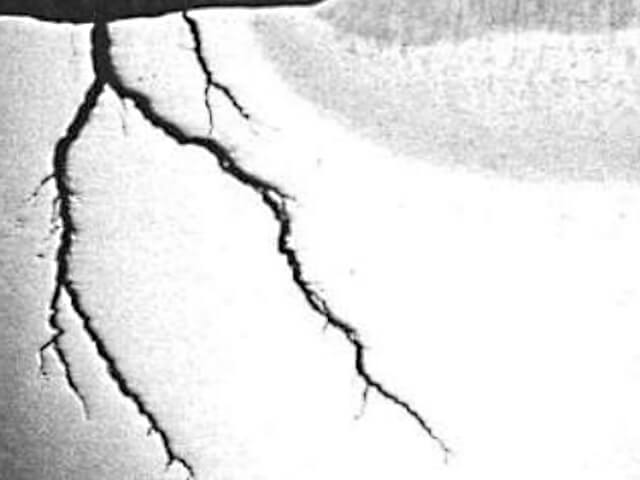
One source suggests that 10-15% of piping failures are a result of fatigue from vibration. Piping vibration can be caused by multiple different mechanisms such as flow-induced turbulence, slug flow, mechanical excitation from machinery, and acoustic pulsation. These mechanisms are often observed by plant operators since they present themselves during normal operation. On the other hand, acoustic-induced vibration (AIV) in pressure relief lines and downstream of control valves used for blow-down (BDV) is difficult to identify since the vibration is not readily observable unless the valves are opened. 

Often downstream of a pressure-reducing device (PRD), AIV occurs in gas systems when acoustic waves generated at flow restrictions excite natural modes of the piping, thus leading to vibration. AIV is different from most types of piping vibration because it generally occurs at much higher frequencies (300-1,500 Hz) and is the result of shell mode excitation. For this reason, AIV is typically not visible to the human eye but is noticeable by touch and transmits high-frequency audible noise outside the piping to the surrounding areas. The occasionality, combined with the high-frequency, low-amplitude vibration, allows AIV to usually go unnoticed until the vibration is heard, the pipe is touched, or a failure occurs. 

To continue reading the article, submit the form below:

Newsletter Archive

Access all of our previously published Industry Insights Newsletter articles:

Recently Published

The TRCA and the Damage Mechanism Advantage

When a heat exchanger tube ruptures, the consequences can extend far beyond overpressure, as uncontrolled mixing of incompatible fluids can create serious safety, environmental, and operational risks that demand rigorous engineering assessment. This article examines the tube rupture credibility assessment (TRCA) and the critical role that damage mechanism review plays in determining whether a full-bore tube rupture is credible, and what that conclusion means for relief system design and inspection planning.

Read More »

The CUI Program Infrastructure Problem

Corrosion under insulation is one of the most persistent sources of unplanned downtime and process leaks in operating facilities, yet most CUI programs are structurally set up to miss it. This article makes the case that CUI leaks are not a technology problem but a funding and governance problem, and explores what a properly structured CUI inspection program actually looks like.

Read More »

Engineering 101: Metallurgy, How Equipment Gets Damaged 

Metals don’t simply wear out; rather, they fail through specific, recognizable damage mechanisms, and understanding the difference is one of the most practical foundations an early-career engineer can build. This installment of our Engineering 101 series introduces the metallurgy fundamentals every new engineer should know, from core material properties to corrosion, fatigue, creep, and embrittlement, with a real-world case study showing how damage mechanism reviews (DMRs) translate directly into safer, more reliable operations.

Read More »
Generic selectors
Exact matches only
Search in title
Search in content
Post Type Selectors
Pages
Industry Insights Newsletter Articles
Events
Library Items