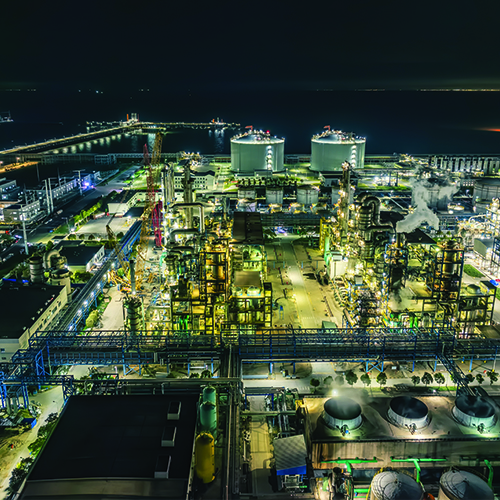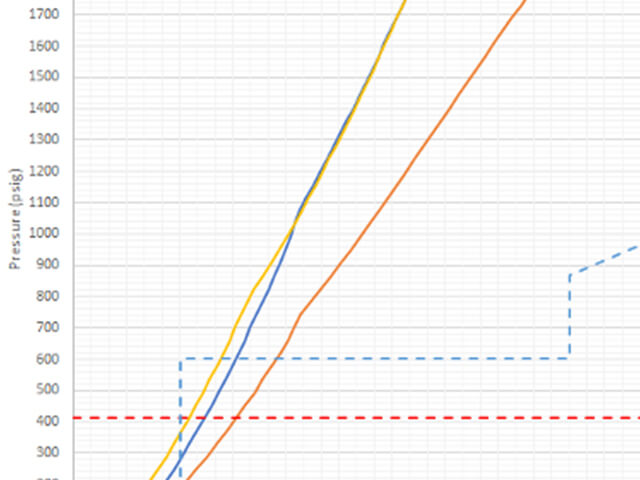
To optimize process unit safety, Equity Engineering provides expert identification of industry-recognized damage mechanisms. Applying technical principles from API RP 571, our engineers evaluate threats like CUI, HTHA, and wet H2S. We deliver actionable insights through damage mechanism reviews (DMRs) and proprietary software to refine inspection strategies, predict outcomes, and prevent equipment failures.
Mitigate Damage Mechanism Risk to Reduce Equipment Failure
Unidentified damage mechanisms in a facility can result in catastrophic fixed equipment or piping failures, unplanned shutdowns, or costly maintenance issues. Implementing an evergreen process safety management (PSM) or mechanical integrity program starts with a damage mechanism review (DMR).
At Equity, our team works with you to detect active and potential damage mechanisms, set safe operating limits, and develop long-term risk management plans. The DMR provides practical recommendations to maximize production, extend the safe operating life, and minimize costly component failures and unit downtime.
Types of Damage Mechanisms
There are hundreds of damage mechanisms in the refining, petrochemical, specialty chemical, fertilizer, and other industrial processing industries. Regardless of industry, identifying, understanding, and mitigating the relevant damage mechanisms are crucial pieces in a successful mechanical integrity program.
- Brittle Fracture – The sudden, unstable crack propagation that shows little to no ductility or plastic deformation. Cracks can be caused by several different damage mechanisms.
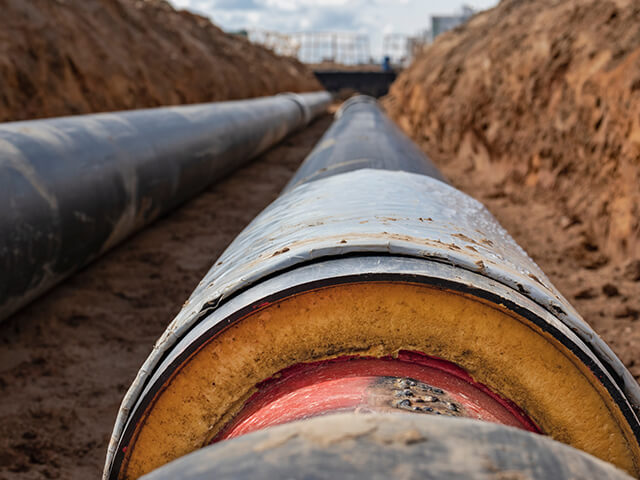
- Corrosion Under Insulation (CUI) – Develops when there is trapped water or moisture on surfaces covered with insulation. Damage typically presents as localized corrosion or pitting in ferritic materials.
- Creep – Typically develops slowly and occurs in metals under stress and high temperature. This often causes ruptures or cracking near welds.
- Fatigue – Caused by cyclic stress due to mechanical, thermal, or vibration loading, and damage manifests as cracking.
- High-Temperature Hydrogen Attack (HTHA) – Often difficult to detect, HTHA causes the degradation of carbon and low-alloy steels exposed to hydrogen gas and can create a significant process safety risk.
- Wet Hydrogen Sulfide (Wet H2S) Damage – Affects the load-carrying capacity of pressure-retaining equipment and leads to hydrogen blistering, hydrogen-induced cracking (HIC), stress-oriented HIC, and sulfide stress cracking (SSC).
- Stress Corrosion Cracking (SCC) – Depends on the material properties, welding and heat treatment parameters, process operating variables, and environmental conditions. SCC can take many forms, including chloride, amine, caustic, ethanol, polythionic acid, sulfate, and ammonia SCC.
- Material Embrittlement – Occurs in many different alloys, under different operating conditions, and is characterized by a loss of ductility. Common types of embrittlement include temper, hydrogen, 885°F (475°C), sigma phase, strain aging, and liquid metal embrittlement.
- General or Localized Corrosion – Involves progressive wall loss/thinning and includes sulfidation, amine, ammonium bisulfide, ammonium chloride, galvanic, fuel-ash, sulfuric acid, caustic, CO2, sour water, high-temperature H2/H2S, hydrofluoric (HF) acid, and hydrochloric (HCl) acid corrosion.
Equity’s Damage Mechanism Review Workflow
Manage long-term equipment reliability; make faster run, repair, replace decisions; and develop effective inspection schedules with a DMR. Using a process flow diagram (PFD), our standardized DMR workflow includes:
- Operating philosophy of each unit
- Historical operating data of the key variables
- Inspection and/or repair history of fixed equipment
- Current operating conditions and metallurgy
- Identification of high-risk equipment or piping
- Interviews with plant personnel
We combine fitness-for-service (FFS) and risk-based inspection (RBI) with DMRs to help predict an equipment’s remaining life and potential risk for failure. You will receive plant- or equipment-specific integrity operating windows (IOWs) and corrosion control documents (CCDs) for long-term planning.
Why do you need IOWs and CCDs?
IOWs and CCDs strengthen and enhance mechanical integrity and RBI programs at a facility. CCDs document the specifics of managing the degradation of a unit for operations, technical, inspection, and integrity personnel. IOWs provide a recommended response or monitoring action when process units exceed the established operational limits.
IOWs and CCDs:
- Serve as proactive tools to manage damage rates, create operating limits, and establish monitoring programs
- Support turnaround planning and shutdown/start-up strategies
- Provide recommendations for equipment upgrades, replacements, and process change
Software for Identifying Damage Mechanisms
PlantManager SAGE, Equity’s proprietary software, is a cloud-based tool that helps you identify and understand the potential damage mechanisms that may cause costly fixed equipment failure. PlantManager SAGE includes API RP 571, 3rd edition to give you all the tools you need, including:
- Guidance through the damage mechanism selection process
- Assistance in selecting the best inspection method for each type of damage
- Process flow diagrams (PFDs) showing where to find damage in a process unit