For engineers early in their careers, process safety can appear to be a specialist discipline managed by a dedicated team and addressed in compliance documentation rather than in day-to-day engineering work. That perception is worth critical examination, however, because process safety is a foundational engineering practice, a solid understanding of which will strengthen performance across nearly every technical role in industry.
Beyond Occupational Safety
Most engineers enter the workforce with a grounding in occupational safety: personal protective equipment, working at height, slip and trip hazards. While that knowledge is essential, process safety operates at a different scale and addresses a fundamentally different category of risk.
Occupational safety is largely concerned with protecting individuals from routine physical hazards (e.g., falls, electrical shock, pinch points). Process safety is concerned with preventing low-frequency, high-consequence events — incidents that occur infrequently, but when they do, can result in multiple fatalities, large-scale environmental damage, significant asset loss, and lasting reputational harm to an organization. The industry’s most serious incidents were not isolated equipment failures. Investigation reports consistently identify systemic breakdowns in design, operations, and management, with consequences measured in lives, environmental damage, and the collapse of organizations.
Process safety is defined as a set of engineering and management practices aimed at preventing unplanned releases of hazardous materials or energy in industrial settings. In practice, this encompasses the pressure relief valve on a reactor vessel, the procedure an operator follows during an abnormal startup, and the management of change (MOC) process that governs equipment modifications. The discipline involves building technical and organizational systems that are resilient enough to interrupt developing problems before they escalate into serious incidents.
Thinking in Lifecycles
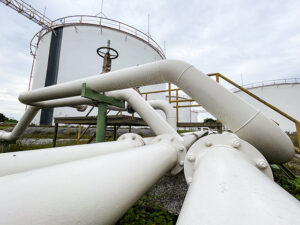
A fundamental shift in perspective for early-career engineers is moving from thinking about equipment as static objects to understanding them as assets with lifecycles. A storage tank is not simply a steel vessel in a yard. It was designed for specific operating conditions, commissioned under defined procedures, operated within established limits, maintained on a schedule, and will eventually be decommissioned and dismantled. Process safety considerations are present at every stage of that lifecycle, and deficiencies at any stage can create risk that carries forward.
Design is where the greatest opportunity exists to reduce risk at the source. The principle of inherent safety — eliminating or minimizing hazards by design rather than controlling them through downstream safeguards — is most effectively applied here. Decisions like selecting a less flammable solvent, specifying lower operating pressures, or reducing inventories of hazardous materials will shape the risk profile of a facility for its entire operating life. Once a plant is constructed, engineers are largely managing the risks embedded in the original design. Thus, process safety considerations must be integrated from the earliest concept phases rather than introduced late in detailed design.
Commissioning is the first practical test of whether design intent has been correctly translated into hardware and operating procedures, a high-risk and often underestimated phase. Equipment is being started for the first time, procedures are being validated against real operating conditions, and personnel are developing their understanding of system behavior. Discrepancies between design assumptions and as-built conditions tend to surface during commissioning, and identifying them in a controlled environment is considerably preferable to discovering them during normal operations.
Operation is where process safety becomes a sustained daily discipline. Maintaining processes within their defined operating envelope — pressure, temperature, flow rate, composition — is not a procedural formality; it is the mechanism by which the integrity of the original design is preserved. When processes drift outside their design parameters, engineered safeguards may no longer perform as intended. Therefore, effective abnormal condition management, well-designed alarm systems, and thorough operator training are, rather than peripheral concerns, central to maintaining operational safety.
Maintenance introduces its own category of risk. Any time a vessel is opened, a line is broken, or a control system is modified, there is potential to introduce hazards through incorrect reassembly, incompatible replacement components, or inadequate isolation prior to work commencing. Mechanical integrity, or maintaining equipment in a condition appropriate for its intended service, is a core process safety requirement that depends on rigorous documentation, qualified personnel, and disciplined permitting systems.
Decommissioning is often treated as a final administrative step, but it carries genuine process safety risk. Residual inventories of hazardous materials, structurally degraded components, and incomplete isolation can create serious hazards for the teams responsible for dismantling assets. A structured decommissioning plan developed well in advance of actual shutdown is a process safety requirement, not an optional exercise.
Layered Protection
A central principle in process safety is that no single safeguard should be relied upon to prevent a catastrophic outcome. Instead, risk is managed through multiple independent layers of protection, each capable of interrupting the sequence of events that leads to a serious incident.
Consider a reactor operating with a flammable process fluid. The first layer of protection is maintaining the process within its normal operating envelope. If that fails, a high-pressure alarm alerts the operator to take corrective action. If the operator’s response is insufficient, an automated safety instrumented system initiates a shutdown. If the shutdown does not fully arrest the situation, a pressure relief valve opens to prevent vessel rupture. If a release still occurs, secondary containment captures the material before it can spread. Each layer functions independently and adds resilience to the overall system.
Formalized in methodologies such as Layers of Protection Analysis (LOPA), this layered approach distinguishes robust process safety design from a system that depends on all conditions remaining favorable. The objective is not to prevent every abnormal event, which is rarely achievable; it is to ensure that no single failure, and no reasonably foreseeable combination of failures, leads directly to a catastrophic outcome.
Analytical Tools
As engineering careers develop, practitioners encounter structured analytical methods for identifying hazards and evaluating risk. Two of the most widely used are worth understanding from an early stage.
HAZOP (Hazard and Operability Study) is a systematic technique for identifying what can go wrong in a process. Working from process flow diagrams (PFDs) and piping and instrumentation diagrams (P&IDs), a multi-disciplinary team applies structured guide words — terms such as more, less, reverse, and no flow — to prompt examination of deviations from design intent. For each deviation, the team identifies potential causes, consequences, and existing safeguards, and then recommends corrective actions where protection is found to be inadequate. HAZOPs are demanding in terms of time and preparation, but they are highly effective at identifying risks that no individual engineer would have identified independently.
LOPA takes the hazard scenarios identified through HAZOP and applies a more quantitative lens: are the layers of protection sufficient (and sufficiently independent) to reduce risk to a tolerable level? It provides a structured, semi-quantitative framework for evaluating whether existing safeguards are adequate or whether additional controls are warranted.
While junior engineers are unlikely to lead these studies, they may often participate in them. Arriving prepared — with a thorough understanding of the process, competence in reading P&IDs, and a rigorous approach to consequence analysis — contributes meaningfully to the quality of the assessment.
Human and Organizational Factors
No substantive discussion of process safety is complete without addressing human and organizational factors. Investigation reports for major industry incidents consistently identify management decisions, organizational pressures, normalized deviation from procedures, and inadequate mechanisms for escalating concerns as root or contributing causes. Equipment failures are frequently the final event in a sequence, not the initiating one.
This has two direct implications for early-career engineers. First, procedural compliance is a process safety requirement. Following established procedures in full, even for routine tasks performed many times previously, is not a formality. Procedures exist because systematic analysis determined that deviation introduces risk that may not be apparent in any individual instance. The accumulation of undetected risk through repeated procedural shortcuts is a well-documented contributor to serious incidents.
Second, raising concerns is a professional responsibility. Process safety depends on individuals at every level of an organization feeling able to report near-misses, flag maintenance backlogs, or question proposed changes that appear to introduce unexamined risk. An observation that seems minor to a junior engineer may be precisely the information needed to prevent an incident. Organizations with strong process safety cultures actively cultivate this kind of reporting; effective engineers contribute to it.
Change Management
One of the most common sources of process safety failure in operating facilities is inadequate management of change (MOC). The original design of a facility was evaluated and deemed safe for specific conditions and configurations. Any modification to equipment, materials, procedures, or operating parameters has the potential to invalidate those assessments.
The practical challenge is that many changes appear inconsequential in isolation. For example, substituting a valve with a similar model from a different manufacturer; adjusting an operating temperature marginally above its defined range to improve throughput; and temporarily disabling an alarm that has been generating nuisance activations are all decisions which can seem reasonable in context. Without a formal process to evaluate safety implications and ensure documentation, training, and procedures are updated accordingly, these individually minor changes accumulate into significant, untracked risk.
Early-career engineers may not hold the authority to approve changes, but they frequently originate or implement them. Engaging seriously with the MOC process at their facility, regardless of the perceived scale of the modification, is one of the most direct contributions a junior engineer can make to process safety.
Building Process Safety Knowledge Over a Career
Process safety knowledge develops progressively. In the early years, the priority is establishing a solid foundation: understanding the hazards present in the industry, how the layers of protection function in a given facility, why critical procedures exist, and how to contribute effectively to risk assessments and incident investigations. This foundation is built through formal training, mentorship, and operational experience.
With experience, the focus shifts toward evaluating and improving existing systems, along with increased competence in tools such as HAZOP, LOPA, and bow-tie analysis. Engagement with industry standards — including API publications, NFPA Standards, IEC 61511 for safety instrumented systems, and OSHA’s Process Safety Management standard — shifts from compliance awareness to applied engineering judgment. The ability to assess whether risks are adequately controlled, and to make a defensible case for additional investment where they are not, becomes a core professional capability.
At a senior level, process safety increasingly involves organizational and management system design: how to sustain safety performance across decades, through leadership transitions and periods of commercial pressure. That is a more complex problem than any individual engineering calculation, and it remains an area of active development across the industry.
Conclusion
Process safety is an integrated, ongoing discipline that requires engineers, operators, maintenance personnel, and managers to maintain a shared and current understanding of existing risks and how they are being managed. It is not the exclusive responsibility of a specialist function, and it cannot be treated as a project phase that concludes at commissioning.
For early-career engineers, the most productive habit to develop is consistent application of a straightforward question at every stage of technical work: what could go wrong here, and how do I know the risk is adequately controlled? The answer will not always be complicated. But the discipline of asking it — across every task, at every stage of an asset’s lifecycle — distinguishes engineers who complete work from engineers who genuinely understand the systems they are responsible for.
The facilities that have sustained strong process safety performance over time are not, as a rule, those that avoided incidents through good fortune. Rather, they are those that embedded process safety into their engineering practice, management systems, and organizational culture and maintained that commitment. The engineers who internalize this early are the ones who grow fastest and lead longest.
Please reach out with any questions by submitting the form below: