INDUSTRY INSIGHTS ARCHIVE

  • Home
  • Industry Insights Newsletter

The TRCA and the Damage Mechanism Advantage

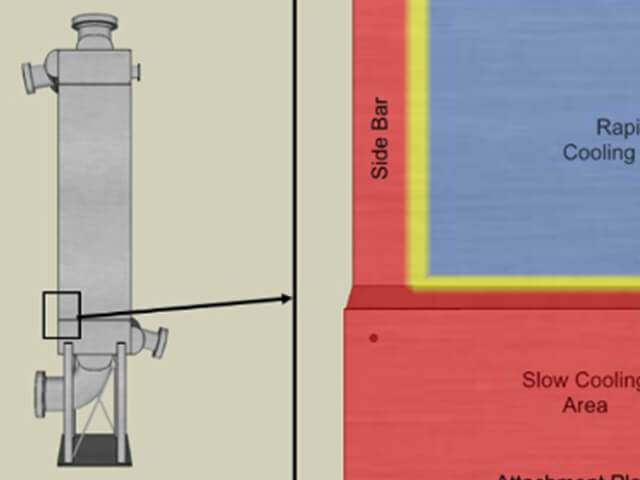
When a heat exchanger tube ruptures, the consequences can extend far beyond overpressure, as uncontrolled mixing of incompatible fluids can create serious safety, environmental, and operational risks that demand rigorous engineering assessment. This article examines the tube rupture credibility assessment (TRCA) and the critical role that damage mechanism review plays in determining whether a full-bore tube rupture is credible, and what that conclusion means for relief system design and inspection planning.
Read More »

The CUI Program Infrastructure Problem

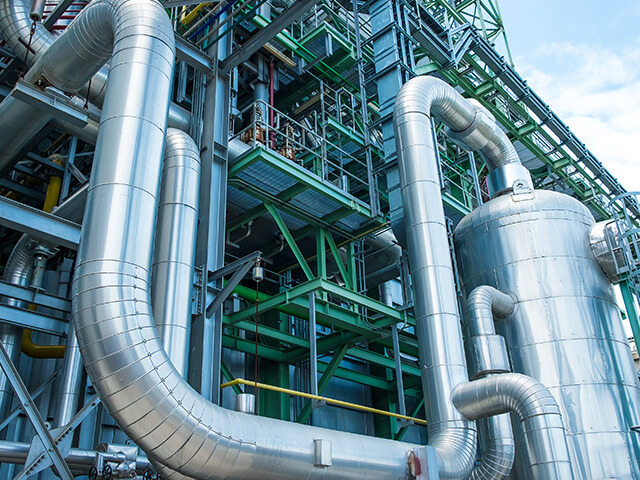
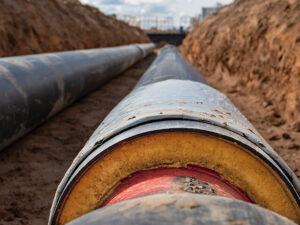
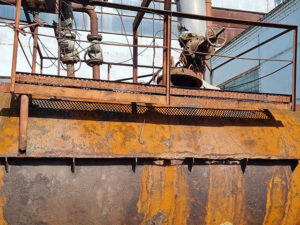
Corrosion under insulation is one of the most persistent sources of unplanned downtime and process leaks in operating facilities, yet most CUI programs are structurally set up to miss it. This article makes the case that CUI leaks are not a technology problem but a funding and governance problem, and explores what a properly structured CUI inspection program actually looks like.

Read More »

Engineering 101: Metallurgy, How Equipment Gets Damaged 

Metals don’t simply wear out; rather, they fail through specific, recognizable damage mechanisms, and understanding the difference is one of the most practical foundations an early-career engineer can build. This installment of our Engineering 101 series introduces the metallurgy fundamentals every new engineer should know, from core material properties to corrosion, fatigue, creep, and embrittlement, with a real-world case study showing how damage mechanism reviews (DMRs) translate directly into safer, more reliable operations.

Read More »

Boilers and Common Damage Mechanisms with Real-World Case Studies

Boilers are essential for industrial steam generation, but corrosion issues can disrupt operations, making prevention and mitigation critical. In this article, Nate and Luke explore common damage mechanisms, discuss effective prevention strategies, and share recent case studies demonstrating the value of expert analysis in maintaining reliability. Read the full article to learn how to keep your systems running smoothly.

Read More »

Damage Mechanisms Affecting Catalytic Reformer Units

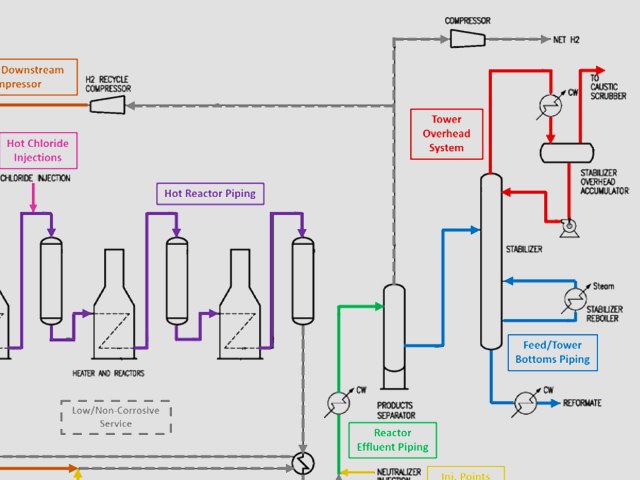
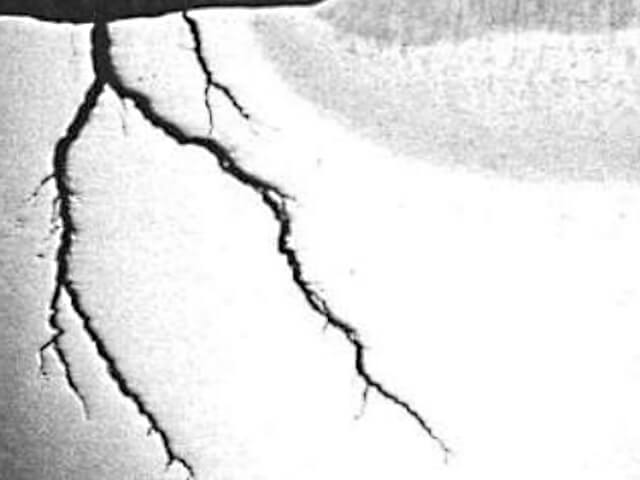
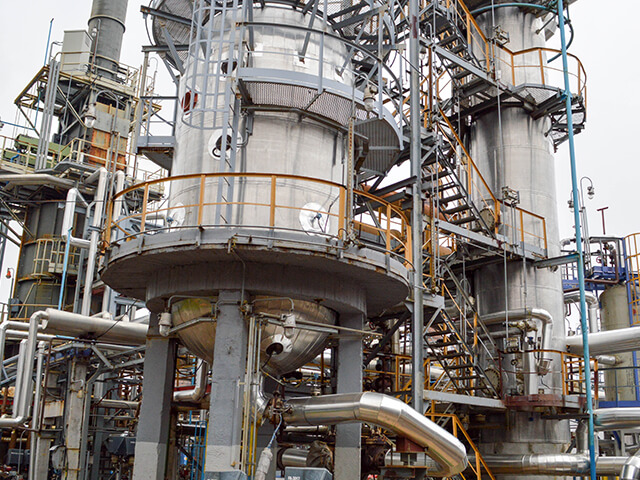
This article offers a detailed look at catalytic reformer units, highlighting key components and operations like octane improvement and hydrogen production. The discussion on damage mechanisms, from high-temperature hydrogen attack to chloride stress corrosion cracking, provides valuable insights and lessons learned from industry experience which address common operational challenges and failures.

Read More »

Damage Review and Risk Assessment of Midstream Amine Processing Units

For those who had the opportunity to watch last week’s webinar presented by Brian and Shane, this article expands on the benefits of risk-based inspection (RBI) for amine processing units and offers a multidisciplinary approach. It begins with an overview of the process and rich/lean amine loading, identifies key damage mechanisms and areas of concern, and proposes options for corrosion mitigation.

Read More »

Effect of Sigma Phase on FCC internals

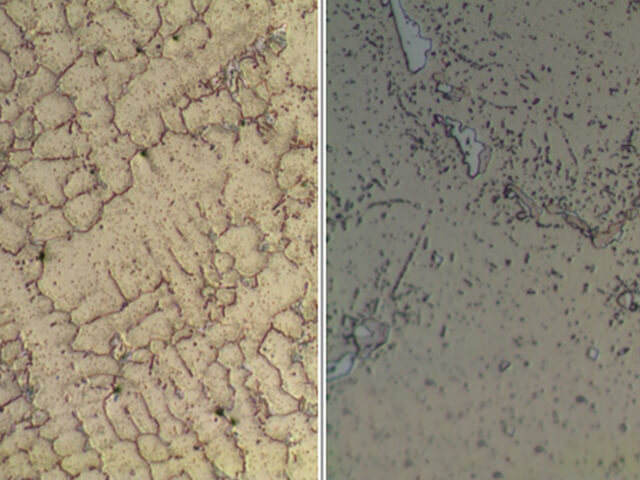
Sigma phase embrittlement is a concern for austenitic stainless-steel components in FCC units and other internal welds in FCC regenerators. Prolonged exposure to high temperatures can lead to sigma phase formation, reducing toughness and ductility and increasing the risk of creep cracking. In this article, the authors explore preventive measures to mitigate sigma phase formation and the importance of weldability testing to increase the reliability of FCC units.

Read More »

Understanding Damage Mechanisms in Industrial Gas Applications

Metallurgy and corrosion experts a key to identifying damage mechanisms and predicting corrosion rates for equipment used in processes like steam methane reformers (SMRs) and air separation units (ASUs). In this article, you’ll read how important it is to recognize which damage mechanism can be reasonably captured with risk-based inspection (RBI) methods and which ones require more detailed analysis using FFS principles. In addition, you will also gain insights into how to create robust mechanical integrity programs for industrial gas production units.

Read More »

Reliability Issues Associated with Brazed Aluminum Heat Exchangers

Brazed aluminum heat exchangers (BAHXs) are distinctly prone to several damage mechanisms, including thermal fatigue, cracking, and corrosion. In this comprehensive article, the author uses a 2016 BAHX failure to explain typical BAHX reliability and maintenance issues and provide an overview of practical damage mitigation techniques.

Read More »
Generic selectors
Exact matches only
Search in title
Search in content
Post Type Selectors
Pages
Industry Insights Newsletter Articles
Events
Library Items